
Ask most buyers what a house costs, and they’ll tell you the number on the listing. That’s rarely what actually leaves your account by closing day. The real cost of buying a house Connecticut buyers face includes attorney fees, inspections, prepaid taxes, and a first round of repairs nobody warns you about.
This guide breaks down what actually sits underneath the purchase price. If you’re planning to buy anywhere in the state, have this conversation before you start touring homes, not after you’re already under contract and scrambling.
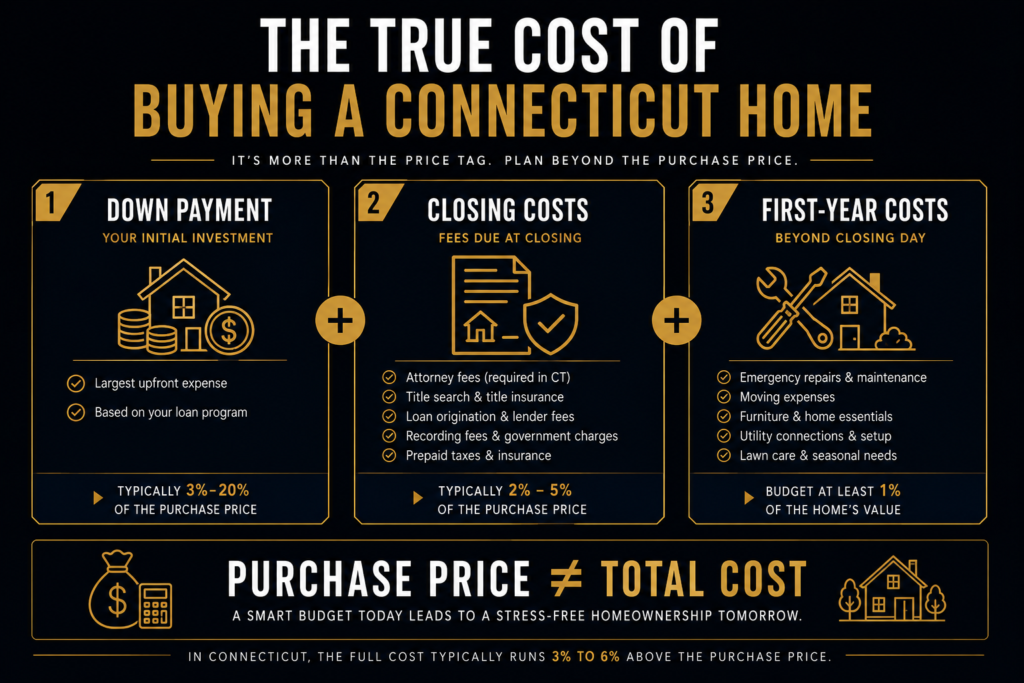
| Key Takeaways • The full cost of buying a house in Connecticut typically runs 3 to 5 percent above the purchase price, on top of your down payment. • Connecticut requires an attorney at closing, so that fee isn’t optional the way it can be in some other states. • Closing costs alone generally fall between 2 and 5 percent of the purchase price, covering everything from title insurance to recording fees. • Older Connecticut homes often carry higher inspection and repair costs, from radon testing to aging oil tanks. • A realistic budget splits into three parts: down payment, closing costs, and a cash reserve for the first few months of ownership. |
Understanding the True Cost of Buying a Home in Connecticut
Connecticut does a few things differently than neighboring states, and it changes what the cost of buying a house Connecticut buyers should expect actually looks like. Attorneys aren’t optional here; they’re required at closing. Conveyance tax applies statewide. And because so much of the housing stock is older, inspection findings tend to run deeper than buyers expect.
If you want a sense of what’s currently on the market before running any numbers, you can learn more about buying a home in Connecticut.
Why the Purchase Price Isn’t Your Total Investment
Down payment, then done, that’s how most people budget, and it’s wrong. Connecticut home buying costs usually tack on another 3 to 5 percent of the purchase price beyond that down payment. On a $500,000 home, that’s $15,000 to $25,000 before you’ve spent a cent on moving trucks or a new couch.
Part of why this catches people off guard: pre-approval letters only reference the loan amount. Closing costs, inspection fees, escrow deposits- none of that shows up on the number a lender hands you upfront.
Common Budgeting Mistakes Homebuyers Make
Here’s where most hidden homebuyer expenses actually come from. Buyers budget for what the lender requires, not what the purchase truly costs. Skip a radon or pest inspection to save a few hundred bucks, and you might miss a problem that costs tens of thousands to fix later.
In our practice, we see this mistake more than almost any other: buyers assume the seller will cover more than they actually will. Seller concessions get negotiated, not handed out automatically, and we’ve watched buyers walk into closing with a cash-to-close number thousands more than what they’d budgeted for, simply because they assumed a credit that never materialized.
Creating a Realistic Home Buying Budget
If you’re serious about buying a home in Connecticut, split your budget into three separate piles: down payment, closing costs, and a cash cushion for the first several months of ownership. Lump it all together, and you’ll likely end up thin on cash right when flexibility matters most.
A decent starting point is setting aside about 1 percent of the home’s value each year for maintenance, starting from the day you close.
Want help running actual numbers instead of rules of thumb? You can get a personalized home buying budget before you make an offer.
Closing Costs Every Connecticut Buyer Should Expect
Connecticut closing costs usually range from 2% to 5% of the purchase price. Breaking these down line by line helps you understand exactly where your money is going.
Attorney Fees
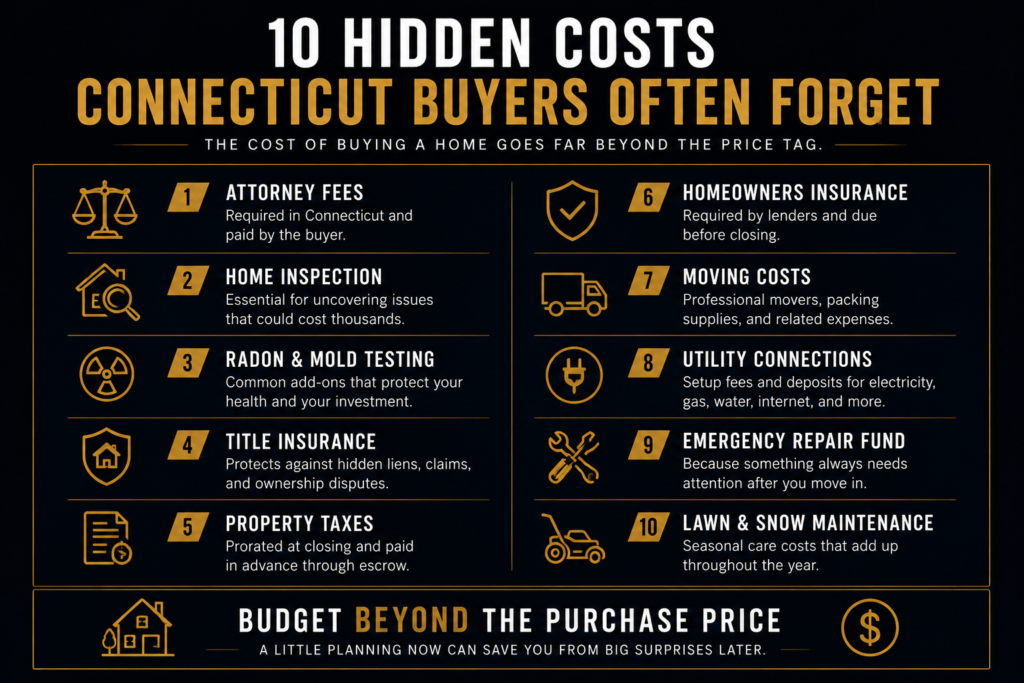
Connecticut requires an attorney at the closing table, full stop, which makes Connecticut real estate attorney fees non-negotiable in the sense that you can’t skip them. Rates shift by firm and by how complicated the deal is, but expect this as a fixed line on your closing disclosure either way.
Loan Origination and Lender Charges
Mortgage closing costs Connecticut buyers see from their lender usually bundle an origination fee, underwriting fee, and charges for credit and appraisal reports. These numbers move around more than people assume from lender to lender. Shopping a couple of options can actually shift your total meaningfully.
Title Search and Title Insurance
Nobody gets excited about the title insurance Connecticut requires, but it protects against ownership disputes or liens a title search might’ve missed. One-time cost, due at closing, and lenders won’t fund a loan without it. Not something you can trim from the budget.
Recording Fees and Government Charges
These costs include deed recording fees and state conveyance taxes. Because they are set by law and are non-negotiable, you can easily calculate them based on the home’s sale price.
Home Inspection and Due Diligence Expenses
A lot of the real hidden homebuyer expenses live right here, especially given how much of Connecticut’s housing stock predates 1970.
General Home Inspection
A home inspection Connecticut buyer orders typically covers roof, foundation, electrical, plumbing, and the major systems, with cost scaling to the home’s size and age. Skipping it to save a few hundred dollars is, hands down, one of the more expensive shortcuts a buyer can take.
Radon, Mold and Pest Inspections
Beyond the general inspection, Connecticut home inspection costs often stack on add-ons: radon testing, mold checks, pest or termite inspections, especially for older homes or ones near wooded lots. Each one’s a separate fee, and each one can turn up something that changes the entire negotiation.
Sewer, Septic and Well Testing
If a home sits outside municipal sewer and water lines, add another layer of scrutiny. A well and septic inspection Connecticut buyers order checks water quality, well output, and septic function, all expensive to fix or replace if something surfaces after you’ve already closed.
Property Taxes and Prepaid Expenses
At closing, property taxes are prorated based on the portion of the year each party owned the home. This adjustment, which either requires you to reimburse the seller or receive a credit, appears as a specific line item on your closing statement.
Escrow Deposits
Lenders generally require prepaid property taxes Connecticut buyers owe to go straight into an escrow account at closing, often two to six months’ worth, so funds are sitting there when the next tax bill hits. This deposit is separate from the taxes themselves, and it adds directly to what you need in cash at closing.
Homeowners Insurance Premiums
Expect to pay homeowners insurance Connecticut coverage a full year in advance at closing, plus a few extra months held in escrow. Coastal and flood-zone properties see meaningfully higher premiums, worth checking before you fall for a particular listing.
| Worth checking early: Connecticut mill rates vary widely by town, sometimes by more than double. Two similarly priced homes in different towns can carry very different annual tax bills. |
HOA Fees and Community Assessments
If you are buying into a condo or planned community, Budget for Connecticut HOA fees, which cover shared amenities and upkeep but can also include special assessments for bigger capital projects. Check the HOA’s reserve fund and assessment history before closing, not after you’ve already signed.
Moving Costs Buyers Often Forget
Between the closing table and moving day sits a whole category of hidden homebuyer expenses that rarely make it into a purchase budget.
Professional Movers and Packing Services
Moving costs Connecticut residents pay swing widely depending on distance, home size, and whether you’re paying for full packing service. Even a move across town can run into the thousands once you factor labor, trucks, and supplies.
Utility Transfers and Connection Fees
Utility setup costs in Connecticut include deposits or connection fees for electric, gas, water, and internet, especially if you’re new to a utility territory. Individually small, but they add up fast when everything needs setting up the same week.
Immediate Furniture and Appliance Purchases
Older homes in particular tend to come with new homeowner expenses like replacing an appliance that didn’t convey, or buying window treatments and furniture to fill a house bigger than your old rental. Build in a cushion for these first-month purchases so they don’t blindside you.
| One cost that almost always gets forgotten entirely: re-keying every exterior lock after closing. It’s a modest expense, usually under a few hundred dollars, but it’s the one step that actually guarantees a past owner, tenant, or contractor no longer has a key to your home. |
Maintenance Costs After Closing
The cost of buying a house Connecticut buyers calculate shouldn’t stop at the closing table, because what a home costs to maintain in a year can rival what it costs to close on it.
Emergency Repair Fund
Aim to set aside a maintenance reserve equal to three to six months of expenses. This creates a buffer for unexpected repairs in an older home, helping you avoid financing emergencies on a credit card.
HVAC, Roof and Appliance Replacements
The big-ticket hidden homebuyer expenses tend to come from systems near the end of their life: an aging furnace, a roof showing its age, appliances the inspector flagged as functional but tired. Knowing roughly how old these systems to plan for the expenses before buying.
Lawn Care, Snow Removal and Seasonal Maintenance
Connecticut homeowners’ costs like lawn care through the warmer months and snow removal once winter shows up, both of which add up over a full year, even if you plan to handle some of it yourself. Gutter cleaning and seasonal HVAC servicing round out the calendar.
Mortgage-Related Costs Beyond Your Monthly Payment
Principal and interest is only part of the story. The full mortgage costs Connecticut buyers should plan for over the life of a loan run deeper than the payment on the statement.
Private Mortgage Insurance (PMI)
Put down less than 20 percent, and you’re likely paying PMI Connecticut lenders require to offset their default risk. It gets folded into the monthly payment and sticks around until enough equity builds up to drop it. Better to understand this upfront than discover it on your first statement.
Interest Rate Buydowns
Some buyers pay for a rate buydown at closing, one of the lesser-discussed mortgage closing costs Connecticut buyers can choose into. It lowers the rate for a set period, or for the life of the loan, in exchange for an upfront fee, and whether it’s worth it really depends on how long you plan to stay put.
Escrow Shortages
A year or two into buying a home in Connecticut, rising taxes or insurance premiums can create an escrow shortage that bumps the monthly payment without warning. Lenders usually spread the shortfall over the following year, good to know so it doesn’t feel like a random increase out of nowhere.
Hidden Costs That Vary by Connecticut Location
Not every town carries the same cost profile, and Connecticut home buying costs shift quite a bit depending on where exactly you’re buying.
Fairfield County vs Other Connecticut Counties
Fairfield County runs higher on purchase price, which means percentage-based closing costs scale up right alongside it. If you’re weighing towns across the state, explore available Fairfield County homes to see how the numbers stack up against other regions.
Luxury Homes vs Starter Homes
Luxury home buying Connecticut deals bring their own cost layer: higher attorney fees on complex transactions, more thorough inspections for bigger systems, steeper insurance tied to replacement cost. Starter homes carry smaller dollar figures but follow roughly the same percentage-based math.
Older Homes vs New Construction
Given Connecticut’s older housing stock, hidden homebuyer expenses tend to run higher for pre-1970s homes, think oil tank inspections, knob-and-tube wiring assessments, that sort of thing. New construction shifts the cost profile toward builder upgrade fees and landscaping instead of inspection surprises.
Ways to Reduce Your Home Buying Costs
There are legitimate ways to bring down closing costs CT buyers face without cutting corners on due diligence.
Negotiating Seller Credits
Seller concessions Connecticut buyers negotiate can cover a chunk of closing costs, particularly when a seller wants to close fast. Bring this up early in the offer, not after the inspection’s already wrapped up.
Shopping for Lenders and Service Providers
Comparing rates and fees across mortgage lenders is one of the easier ways to cut total cost, since origination fees and rates can differ meaningfully between lenders for the exact same borrower. The same logic applies to picking an attorney or an inspector.
Working With an Experienced Local Realtor
An expert Connecticut real estate agent knows which costs are negotiable and which aren’t, often saving a buyer more than their commission would suggest.
Want that kind of guidance early on? Speak with a Connecticut real estate expert before you make an offer.
Sample Budget for Buying a Connecticut Home
Seeing real numbers side by side makes the cost of buying a house Connecticut buyers face a lot easier to plan around than percentages floating in the abstract. It also helps to browse homes for sale across Connecticut at different price points so these figures aren’t just abstract math.
Estimated Costs on a $500K Home
On a $500,000 purchase, plan for roughly $15,000 to $25,000 in combined closing costs, inspections, and prepaid escrow, on top of the down payment. These numbers among Connecticut home buying costs stay fairly predictable because they scale in a fairly linear way with price.
Estimated Costs on a $750K Home
Bump up to $750,000, and the expense lands closer to $22,000 to $37,000, with attorney and lender fees creeping up slightly for the larger loan. Insurance premiums climb too, tied to home value and replacement cost.
Estimated Costs on a $1M Home
At $1 million, expect closing costs totals somewhere in the $30,000 to $50,000 range once conveyance tax, title insurance, and prepaids are all in the mix. Luxury properties can push that higher depending on lot size, systems, and insurance complexity.
How Kristin Egmont Helps Buyers Avoid Costly Surprises
You shouldn’t have to piece together the cost of buying a house in Connecticut yourself. Here’s how Kristin Egmont, a real estate expert, works through the process.
Personalized Budget Planning
We create a precise budget for every buyer before they make an offer. Buyers using generic estimates often face surprises at the closing table. We help you calculate the true cost of buying a house in Connecticut, including taxes and inspection fees, to prevent last-minute financial gaps.
Local Vendor Recommendations
A trusted Connecticut real estate agent brings a network of vetted attorneys, inspectors, and lenders built over years of local transactions, which saves buyers the guesswork of picking blind. That network often means smoother closings with fewer surprises along the way.
Negotiating Better Terms for Buyers
From requesting seller credits to timing an offer just right, smart negotiation can cut down closing costs CT buyers end up paying. This is exactly where experienced local representation tends to pay for itself many times over.
Conclusion: Budget Beyond the Purchase Price
The purchase price is only the beginning. The real cost of buying a house in Connecticut includes expenses like unexpected escrow deposits, inspection findings, and future maintenance. A formal budget is far more reliable than a quick guess, helping you account for every detail before you sign your closing disclosure.
When you’re ready to run your own numbers, Kristin Egmont can walk you through exactly what to expect for your specific town, price point, and loan type. Schedule your buyer consultation today and walk into your next offer with a real budget, not a guess.
FAQs
What are the average closing costs when buying a home in Connecticut?
Closing costs CT buyers typically pay run between 2 and 5 percent of the purchase price, covering attorney fees, lender charges, title insurance, and government recording fees.
What hidden expenses should first-time Connecticut homebuyers expect?
The most overlooked hidden homebuyer expenses include inspection add-ons, escrow deposits, moving costs, and an emergency repair fund for that first year.
How much should I budget beyond my down payment?
Beyond the down payment, the full cost of buying a house Connecticut requires usually adds another 3 to 5 percent of the purchase price in closing costs and prepaid items.
Are attorney fees required when buying a home in Connecticut?
Yes. Connecticut real estate attorney fees are mandatory, since state law requires attorney representation for buyers at closing.
Do I need multiple home inspections before closing?
A general home inspection Connecticut covers major systems, but radon, mold, pest, and well or septic testing are separate inspections worth ordering depending on the property.
What prepaid costs are due at closing?
Prepaid items among closing costs CT typically include several months of property taxes and a full year of homeowners insurance, both landing in escrow.
How can I reduce my closing costs in Connecticut?
Lowering closing costs CT usually comes down to negotiating seller credits and comparing rates across a few lenders, attorneys, and inspectors before committing.
Are property taxes included in my monthly mortgage payment?
Most lenders roll property taxes Connecticut owed into the monthly payment through escrow, rather than billing separately once a year.
What maintenance costs should new homeowners prepare for?
Beyond routine upkeep, hidden homebuyer expenses after closing often include HVAC servicing, roof repairs, and appliance replacements as systems age.
Why should I work with a local Connecticut Realtor before buying?
A knowledgeable Connecticut real estate agent helps buyers anticipate costs specific to a town or property type long before they show up as a surprise at closing.