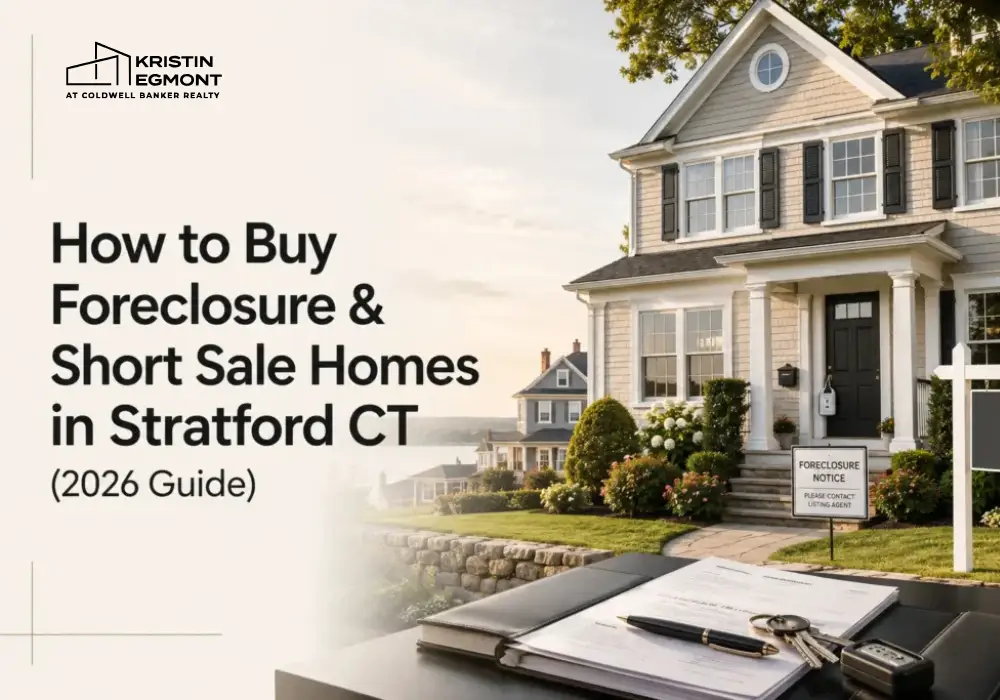
Buying foreclosure homes in Stratford, CT can offer great savings if you understand the process. The challenge is to know what you’re really getting into before you make an offer. These properties often require extra work and careful research.
This detailed guide will help you navigate financing, hidden costs, and risks to buy a foreclosure or short sale in Stratford, CT, so you can make informed offers with confidence.
| Key Takeaways: • Foreclosures are owned by the bank. Short sales still require original homeowner and lender permission. • Below-market pricing is common, but repair costs can eat into the savings fast. • A title search is essential to catch liens before they become your problem. • Pre-approval and cash offers win more often on distressed listings. • Working with a local agent who understands the foreclosure process can save time and money. |
Understanding Foreclosure and Short Sale Properties
Before you start searching, understand exactly what you’re looking at. Foreclosures and short sales are not the same thing, and the buying process differs for each.
What Is a Foreclosure Property?
Foreclosure happens when a lender takes back a property because the owner has stopped paying the mortgage. Bank-owned homes in Stratford follow a legal process before they are listed for resale by the lender. In Connecticut, this process runs through the courts, which means it can take months from the first missed payment to the final sale. Once the bank owns the home, it’s typically sold as-is, often below market value, since lenders want these assets off their books.
What Is a Short Sale?
A short sale is when a homeowner sells a home for less than the mortgage owing on the residence. Short sale transactions in Stratford, CT are subject to lender approval before closing, as the bank agrees to accept a reduced payoff. The homeowner still holds title and is still part of the negotiation, which is a key difference from a bank-owned sale.
These deals can take longer to close than a traditional sale, since the lender’s review process adds an extra step buyers don’t face elsewhere.
REO vs Foreclosure vs Short Sale
An REO, or real estate owned property, is a home the bank already repossessed and now owns outright. In my experience, buyers often confuse this with a short sale. A short sale still involves the original homeowner, who negotiates the price alongside the lender. An REO does not. The bank sets the price and sells it directly, frequently using an asset manager.
Knowing which category a listing belongs to helps you set realistic expectations about timeline, negotiation room, and who you’re actually working with at the table.
| Quick Tip: If a listing doesn’t specify whether it’s a short sale or bank-owned, ask your agent to verify it before you write an offer. The negotiation approach, and who has final say, is completely different for each. |
Why Investors Buy Distressed Properties in Stratford
Distressed properties attract investors for a few clear reasons. Stratford’s location along Long Island Sound and its mix of housing stock make it appealing for both flips and long-term holds.
Opportunities to Buy Below Market Value
Below-market homes in Stratford, CT are the main draw for most investors. Lenders want to move these properties quickly, which can create room to negotiate below the listed price, especially on homes that have sat vacant for a while. Browse foreclosure and investment homes in Stratford CT to see current opportunities in the area.
Potential for Long-Term Appreciation
Stratford has seen steady interest from buyers looking for coastal access without Fairfield County’s highest price tags. A Stratford real estate investment purchased at a discount today can build equity as the surrounding market matures, particularly in neighborhoods seeing renewed interest in renovation and infill development.
Rental Income Opportunities
Many investors buy distressed properties with the idea of renting them out. Once renovations are complete, a Stratford investment property near transit or the seaside might draw continuous renter demand. Multi-family foreclosures in particular can offer more than one income stream from a single purchase, which is worth factoring into your overall return calculation.
Where to Find Foreclosure Homes in Stratford CT
Finding the right property starts with knowing where to look. Not every listing shows up on the usual real estate sites.
Bank-Owned Property Listings
Banks often list bank-owned homes in Stratford directly through their asset management divisions or through partner agents assigned to manage REO inventory. These listings move fast once they’re public, so it pays to check often and have financing ready ahead of time.
Government Foreclosure Auctions
Foreclosure auctions in Connecticut happen through the court system, since Connecticut uses judicial foreclosure rather than a non-judicial process. These properties might offer a steep discount on these homes, but you often have to buy them as is without an inspection period, and you have to pay full price or a large deposit at the time of sale.
MLS Listings Through Local Realtors
Many Stratford CT homes for sale in foreclosure or short sale status eventually land on the MLS. Working with a local agent gives you access to these listings as soon as they reach the market, in addition to context around pricing history and how long the property has been sitting. Explore available Stratford properties to see what’s currently listed.
Step-by-Step Guide to Buying a Foreclosure
Buying a foreclosure follows a different rhythm than a standard home purchase. Here’s how I walk my clients through it.
Get Pre-Approved for Financing
Start with foreclosure financing CT options before you begin touring homes. Sellers of distressed properties want proof you can close quickly, so pre-approval puts you ahead of other buyers and gives you a clear budget to work from before you fall in love with a property you can’t finance.
Hire a Local Real Estate Agent
A Stratford real estate expert who knows the foreclosure process can save you time and money. In our practice, we’ve found that buyers who work with an experienced agent avoid the most common mistakes, like missing lien issues or underestimating repair costs.
Submit a Competitive Offer
Once you find a property, move fast. Banks often review multiple offers on buy REO Stratford Connecticut listings within days, and they typically favor offers with strong financing, minimal contingencies, and a quick close date over a slightly higher price with more conditions attached.

How to Buy a Short Sale Property
Short sales require patience. The process involves the lender as much as the seller, and that adds an extra layer of approval.
Understanding Lender Approval
Every short sale process Connecticut transaction needs sign-off from the seller’s lender. The bank reviews the offer, the seller’s financial hardship documentation, and the payoff shortfall before it agrees to accept the reduced amount and let the sale proceed.
Expected Timelines
A typical Stratford short sale timeline runs longer than a standard purchase. In our practice, we tell clients to expect anywhere from a few weeks to a few months for lender approval alone, and that’s before the standard closing process even begins.
Common Delays Buyers Should Expect
Distressed property Stratford CT 2026 buyers often run into delays from incomplete paperwork or multiple lienholders, since a second mortgage or home equity line also needs to agree to the shortfall. Staying in close contact with your agent and the listing agent helps keep things moving and catches problems before they stall the deal entirely.
| Local Insight: In our practice, the short sales that close fastest are the ones where the seller’s agent has already lined up lender approval before listing. Ask early whether that groundwork has been done. |
Financing Options for Distressed Properties
Not every loan works for a distressed property purchase. Some homes need repairs before a lender will approve financing at all.
Conventional Loans
A foreclosure mortgage in CT from a traditional lender is best for properties that are move-in ready or need very minimal renovations. Most lenders want the home to be in decent shape and pass an appraisal, which might disqualify homes with serious structural or safety issues until they are repaired.
FHA 203(k) Renovation Loans
With a renovation loan in Connecticut like the FHA 203(k), your repair expenditures are rolled into your mortgage. So you get to finance the purchase price and your restoration budget with one loan.
This option is best for purchasers who are purchasing a fixer-upper and will need to perform major renovations to the property before they can move in. It does need more documentation and takes longer to get approved for than a traditional loan.
Cash Purchases
Many investment property cash buyers skip financing altogether. Cash offers move faster and often win out over financed offers on distressed properties, since there’s no appraisal contingency or lender timeline to worry about. This is especially common at foreclosure auctions, where full payment is often required immediately.
Hidden Costs Buyers Should Budget For
The purchase price is only part of the picture. Distressed properties often come with costs that catch new buyers off guard.
Repairs and Renovations
Foreclosure renovation costs can add up quickly, especially if a home sat vacant for months without basic maintenance. In our practice, we’ve found that buyers who budget an extra 10 to 15 percent above their repair estimate avoid unpleasant surprises once contractors get a closer look.
Property Inspections
A foreclosure inspection CT is one of the smartest investments you can make before closing, even on an as-is sale. It won’t stop the deal, but it tells you exactly what you’re walking into, from roof condition to plumbing and electrical systems that may not have been serviced in years.
Closing Costs and Legal Fees
Stratford closing costs on a distressed property can run higher than a traditional sale, especially if there are title issues to clear or multiple liens to release before the deed transfers. Build these fees into your budget from the start rather than treating them as an afterthought.
| Quick Tip: Ask your lender for a full closing cost estimate early, and get a repair quote from a licensed contractor before closing, not after. Both numbers change your real offer price. |
Risks of Buying Foreclosures and Short Sales
Distressed properties carry more risk than a standard resale. Knowing what to watch for protects your investment.
Buying “As-Is” Properties
An as-is home purchase in CT means the seller won’t make repairs or credit you for issues found during inspection. You’re accepting the property in its current condition, problems included, so any negotiation on price needs to happen before you sign rather than after the inspection report comes back.
Outstanding Liens and Title Issues
A title search foreclosure CT is essential before closing. Unpaid taxes, contractor liens, or old judgments can attach to a distressed property and become your responsibility if they aren’t cleared first. Title insurance can help, but it works best when problems are caught early rather than discovered after the deal closes.
Unexpected Repair Costs
Distressed property Stratford CT 2026 listings sometimes hide bigger problems behind cosmetic issues, like fresh paint covering water damage or a functioning furnace masking an aging electrical panel. A thorough inspection is the best defense against costly surprises after closing.
Tips for Successful Real Estate Investors
A little preparation goes a long way when you’re investing in distressed real estate. These are the habits I see work best.
Analyzing Comparable Sales
Investment property analysis starts with comparable sales in the same neighborhood, ideally homes sold within the last three to six months. Look at recently sold homes with similar size, lot, and condition to set a realistic value, and adjust for any major differences in finish level or repair needs.
Calculating Potential ROI
Your Stratford investment returns depend on an honest estimate of purchase price, repair costs, carrying costs during renovation, and expected resale or rental value. Run the numbers before you make an offer, not after, and build in a buffer for the repairs that always cost more than the first estimate.
Working With Local Professionals
Stratford real estate investing works best with a team you trust. That means an agent, a lender, an inspector, and sometimes a contractor, all working from the same information and moving at the same pace when a deal needs to close quickly. Learn about Stratford neighborhoods for investors before narrowing down where to focus your search.
Is Buying a Foreclosure in Stratford Worth It?
Buying foreclosures and short sales in Stratford can be profitable if you’re prepared. Since this market requires careful planning, secure your financing early, budget for repairs, watch for potential title issues, and work with a local expert to help you make informed offers.
If you’re ready to explore what’s available, work with Kristin Egmont to find the right opportunity. Schedule a consultation with a Connecticut real estate expert and let’s talk through your options together.
FAQs
Where can I find foreclosure homes in Stratford CT?
Bank asset management listings, court foreclosure auctions, and the local MLS are the three main sources for foreclosure homes in Stratford, CT. Working with a local agent will provide you the quickest access, as a lot of these listings sell before they are listed.
What is the difference between a foreclosure and a short sale?
A short sale in Stratford CT still requires the original homeowner to negotiate a deal with their lender, but a foreclosure means the bank already owns the property outright.
Can first-time buyers purchase bank-owned homes in Stratford?
Yes. First-time buyers can acquire bank-owned homes in Stratford, but most lenders want a solid pre-approval and an understanding of the state before they will authorise financing on a troubled property.
Are foreclosure homes cheaper than traditional listings?
Often, yes. Below-market homes in Stratford, CT typically sell under market value, but repair costs might take away some of those savings, so it’s worth doing the whole numbers before assuming a deal is as good as it seems.
What is an REO property?
An REO is a home the bank already repossessed and now owns directly, distinct from a buy REO Stratford Connecticut short sale where the original owner still holds title.
Do foreclosure homes require inspections?
Inspections aren’t required by the seller, but a foreclosure inspection CT is strongly recommended since foreclosure sales are almost always as-is. Skipping one can leave you responsible for repairs you never had a chance to see coming.
How long does it take to buy a short sale property?
A short sale Stratford CT purchase typically takes several weeks to a few months, due to the lender approval process. Timelines can stretch further if there’s more than one lienholder involved in the payoff.
What financing options are available for foreclosure purchases?
Buyers can use conventional loans, FHA 203(k) renovation loans, or cash, depending on foreclosure financing CT requirements and the property’s condition. Cash tends to move fastest, while renovation loans suit homes that need significant work.
What risks should buyers know before purchasing distressed properties?
Title issues, hidden repair costs, and as-is sale terms are the biggest risks for distressed property Stratford CT 2026 buyers to watch for. A title search and a professional inspection go a long way toward catching these before closing.
Is buying a foreclosure a good investment in Stratford?
It can be, for buyers who budget carefully and work with experienced local professionals to navigate foreclosure homes Stratford, CT opportunities. Preparation and realistic repair estimates are usually what separate a good deal from a costly mistake.